cocoaSpanish
All Spanish lessons
Spanish · Beginner
Busco algo para el dolor de cabeza
I'm looking for something for a headacheHero phraseBusco algo para el dolor de cabezaI'm looking for something for a headache
A1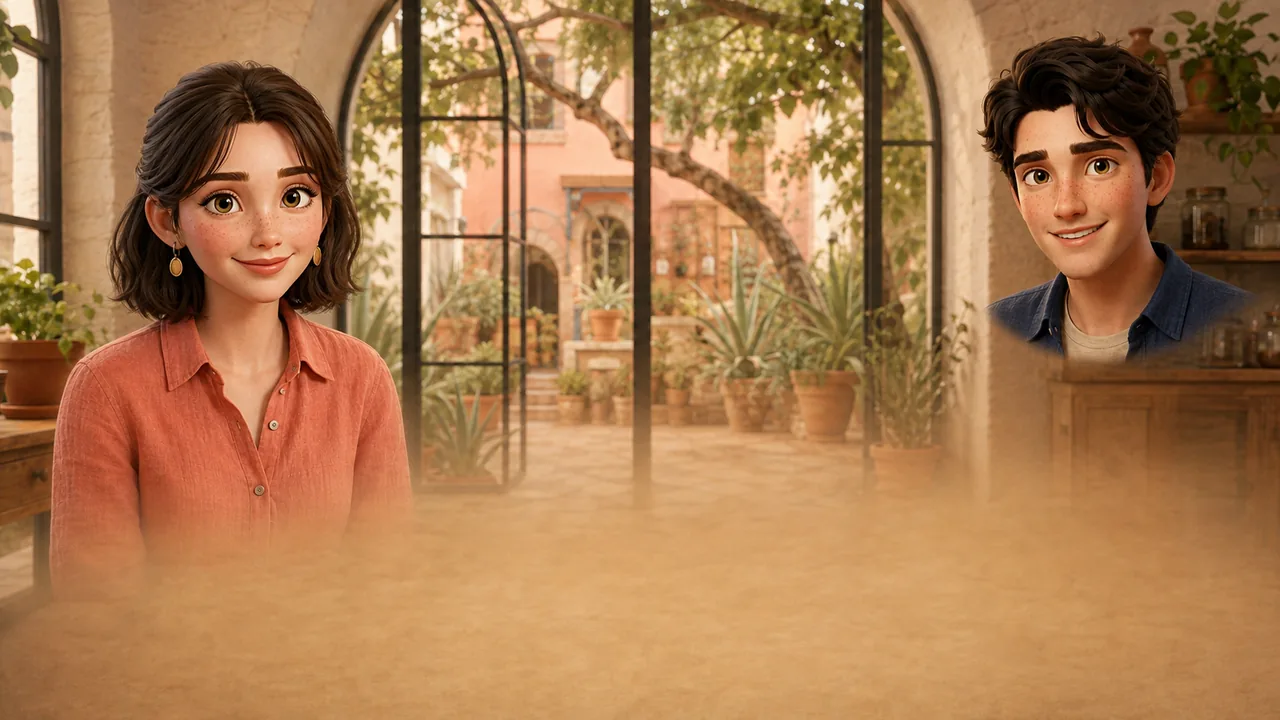 14:27 listen

 Hosted by Diego & Camila
Today you'll learn:
The vocabulary
6 phrases from “Busco algo para el dolor de cabeza”
Each phrase has a plain explanation and real lines from the show. Tap “Hear it” to jump to that moment.
Busco algo para el dolor de cabezaHero phrase
I'm looking for something for a headache- Llego al mostrador de la farmacia y digo: Busco algo para el dolor de cabeza.I arrive at the pharmacy counter and say: Busco algo para el dolor de cabeza.
- Nuestra primera frase es la principal: Busco algo para el dolor de cabeza.Our first phrase is the main one: Busco algo para el dolor de cabeza.
- Me acerqué al mostrador y dije: Busco algo para el dolor de cabeza.I approached the counter and said: Busco algo para el dolor de cabeza.
¿Necesito receta médica?Phrase 1
Do I need a medical prescription?- Pregunto al farmacéutico antes de comprar: ¿Necesito receta médica?I ask the pharmacist before buying: ¿Necesito receta médica?
- La segunda frase es para saber si necesitas receta: ¿Necesito receta médica?The second phrase is to find out if you need a prescription: ¿Necesito receta médica?
- El farmacéutico sonrió y pregunté con calma: ¿Necesito receta médica?The pharmacist smiled and I asked calmly: ¿Necesito receta médica?
¿Tiene una caja pequeña?Phrase 2
Do you have a small box?- El empleado muestra un paquete grande y pregunto: ¿Tiene una caja pequeña?The clerk shows a large package and I ask: ¿Tiene una caja pequeña?
- La tercera frase ayuda a pedir una cantidad pequeña: ¿Tiene una caja pequeña?The third phrase helps you ask for a small amount: ¿Tiene una caja pequeña?
- El hombre mostró una caja grande y pregunté: ¿Tiene una caja pequeña?The man showed a large box and I asked: ¿Tiene una caja pequeña?
¿Cómo se toma esto?Phrase 3
How do you take this?- Recibo la cajita y pregunto al farmacéutico: ¿Cómo se toma esto?I receive the little box and ask the pharmacist: ¿Cómo se toma esto?
- La cuarta frase pregunta por las instrucciones de uso: ¿Cómo se toma esto?The fourth phrase asks about the instructions for use: ¿Cómo se toma esto?
- El farmacéutico trajo una cajita azul y pregunté: ¿Cómo se toma esto?The pharmacist brought a little blue box and I asked: ¿Cómo se toma esto?
¿Cuánto es en total?Phrase 4
How much is it in total?- El empleado coloca la cajita en el mostrador y pregunto: ¿Cuánto es en total?The clerk places the little box on the counter and I ask: ¿Cuánto es en total?
- La quinta frase es para saber el precio: ¿Cuánto es en total?The fifth phrase is to find out the price: ¿Cuánto es en total?
- Escuché las instrucciones y pregunté el precio: ¿Cuánto es en total?I listened to the instructions and asked the price: ¿Cuánto es en total?
¿Puedo pagar con tarjeta?Phrase 5
Can I pay by card?- Saco mi tarjeta de crédito y pregunto: ¿Puedo pagar con tarjeta?I take out my credit card and ask: ¿Puedo pagar con tarjeta?
- Y la sexta frase es para el momento del pago: ¿Puedo pagar con tarjeta?And the sixth phrase is for the moment of payment: ¿Puedo pagar con tarjeta?
- Saqué mi cartera y pregunté: ¿Puedo pagar con tarjeta?I took out my wallet and asked: ¿Puedo pagar con tarjeta?
The full conversation
Listen & read along
Camila · now playing
¡Hola a todos! Bienvenidos a nuestro podcast de español fácil.
ShortcutsAPrevious lineDNext lineSReplay this lineRLoop this lineSpacePlay / pause
00:00Intro
Hello everyone! Welcome to our easy Spanish podcast.
Hi, Camila! Hello to all our dear friends!
Today we have a very important, and very practical topic for everyone.
Yes! We talk about how to buy basic medicine, in a pharmacy.
When you travel for the first time, to a Spanish-speaking country, everything is new.
You walk along pretty streets, try delicious food, and enjoy a lot.
But sometimes, after the sun, you feel mild discomfort.
Exactly. One day you walk all afternoon, and your head hurts.
Hahaha! That happened to me recently, on a relaxing trip.
It is a very common situation, for anyone on a trip.
That's why it is very important to know how to communicate well, in the pharmacy.
In Latin American pharmacies, they always assist you with kindness.
You only need a few simple phrases, to explain your need clearly.
With a smile and good manners, communication is very simple.
Totally! Pharmacists always help you, with great patience.
Today we prepared six direct, useful, and very easy to remember phrases.
They are phrases to greet, ask basic questions, and pay for your purchase.
Let's listen to our six phrases for today, in order.
Our first phrase is the main one: Busco algo para el dolor de cabeza (I'm looking for something for a headache).
The second phrase is to know if you need a prescription: ¿Necesito receta médica? (Do I need a medical prescription?).
The third phrase helps ask for a small amount: ¿Tiene una caja pequeña? (Do you have a small box?).
The fourth phrase asks about usage instructions: ¿Cómo se toma esto? (How do you take this?).
The fifth phrase is to know the price: ¿Cuánto es en total? (How much is it in total?).
And the sixth phrase is for payment time: ¿Puedo pagar con tarjeta? (Can I pay by card?).
Excellent! They are six very useful and valuable phrases.
With these phrases, you will enter the pharmacy, with complete confidence.
And now, Diego is going to tell us a real story, in a pharmacy.
Yes! Yesterday I lived this experience in person, and want to share it.
Tell us everything, Diego! Where did your walk begin yesterday?
Yesterday afternoon, I walked along a quiet street in Guanajuato.
What a pretty city! But in the afternoon the sun gets quite hot.
Yes, I walked for three whole hours, without my favorite hat.
Oh, Diego! You always forget your hat, when you go out for a walk.
Hahaha! It's true, Camila. And that's why my head felt very heavy.
And what did you do, when you felt that discomfort on the street?
Suddenly, I saw the green sign of a small pharmacy.
What good luck! Local pharmacies have very visible signs.
I pushed the glass door, and entered the clean, cool store.
Inside you feel great relief, and great calm after the heat.
I saw very pretty white shelves, with many organized products.
And behind the counter, you saw the pharmacist ready to assist.
I approached the counter and said: Busco algo para el dolor de cabeza.
A very direct, clear, and very polite phrase to begin.
The pharmacist greeted me, with a big smile and kindness.
What a relief! It brings great calm when they greet you with a smile.
The pharmacist smiled and I asked calmly: ¿Necesito receta médica?
A very smart question, before choosing any product!
The pharmacist told me that for simple pain, I don't need a prescription.
Sure. For common pain, they sell over-the-counter tablets.
The man showed a large box and I asked: ¿Tiene una caja pequeña?
Very well thought! A large box takes up too much space, in a backpack.
The pharmacist brought a small blue box and I asked: ¿Cómo se toma esto?
We should always ask how to take the medicine, carefully.
The pharmacist calmly explained to me: you take it with water according to the packaging.
It is an explanation very easy to remember, and very easy to follow.
I listened to the instructions and asked the price: ¿Cuánto es en total?
It is good to know the exact cost, before taking out your wallet.
The pharmacist told me: it is fifty pesos in total.
A very fair, economical, and good price!
I took out my wallet and asked: ¿Puedo pagar con tarjeta?
Nowadays almost all pharmacies, accept card payments.
I paid with my card on the machine, and walked out very happy.
What a good experience, Diego! You bought your medicine without any difficulty.
Yes, then I bought a bottle of water, and rested in the park.
You drank fresh water, and your head rested in the shade.
Exactly! And after a few minutes, I felt much better.
What great relief! Now we are going to study each phrase, with much detail and calm.
Let's study the first phrase calmly: Busco algo para el dolor de cabeza.
Here we use the verb buscar in present. You say 'busco algo para'.
In English it means: 'I am looking for something for a headache'.
It is a very natural phrase, to explain your discomfort immediately.
If you have another discomfort, you only change the last words.
For example, you can say stomach ache, or throat pain.
But the structure 'busco algo para', always stays the same.
Exactly! It is a very useful formula, in any health store.
We now move to our second phrase: ¿Necesito receta médica?
The word receta refers to the official paper, signed by the doctor.
In English it means: 'Do I need a prescription?'.
In many countries, some medicines require a medical prescription.
But common tablets for the head, are over the counter.
With this question you confirm, if you can buy the product directly.
The pharmacist answers you, with much kindness and clarity.
That way you avoid any confusion, before paying.
Our third phrase is very useful: ¿Tiene una caja pequeña?
In English it means: 'Do you have a small box?'.
Sometimes the seller shows you, a pack with forty tablets.
But on a short trip, you only need a few tablets.
A small box costs less, and does not take up space in your luggage.
Hahaha! Sure, nobody wants to carry heavy boxes, in their pocket.
Also, small boxes are easier to store, in your purse.
Totally! It is the most practical option for any traveler.
We reach our fourth phrase for today: ¿Cómo se toma esto?
This question is very important, to know the instructions for use.
In English it means: 'How do you take this?'.
The pharmacist explains to you, if it is taken with a glass of water.
He also indicates, if it is better to take it after eating.
Always listen carefully, and read the packaging with care.
Our fifth phrase helps us at the final moment: ¿Cuánto es en total?
In English it means: 'How much is it in total?'.
It is a short, classic, and very common question in any shop.
The word total tells you the exact amount, that you are going to pay.
That way you can prepare your bills, or your card with peace of mind.
And we reach our sixth phrase: ¿Puedo pagar con tarjeta?
In English it means: 'Can I pay by card?'.
You can use your debit card, or your international credit card.
I always prefer to pay by card, because I don't carry coins.
Well, I prefer to carry some cash, in case the machine fails.
Good point! Now we are going to do a short conversation together to practice.
Let's practice a real situation, at the pharmacy counter!
Excellent idea! I am the customer, and you are the pharmacist.
Perfect! I am ready behind the counter. Let's start the dialogue!
Good morning, young man! Welcome. How can I help you today?
Good morning! Busco algo para el dolor de cabeza.
Very good. Here I have these tablets for common pain.
Thank you very much. ¿Necesito receta médica?
No, for these simple tablets, you do not need a medical prescription.
What good news! ¿Tiene una caja pequeña?
Yes, sure. Here I have a small box, with ten tablets.
Sounds very good to me. ¿Cómo se toma esto?
You take it with a glass of water, according to the instructions on the packaging.
Excellent, I'll take one small box. ¿Cuánto es en total?
It is sixty pesos in total, for the small box.
Perfect. ¿Puedo pagar con tarjeta?
Yes, of course. You can swipe your card on the machine.
Ready! The charge went through. Thank you very much for your kind assistance.
With pleasure! Have a good day and a good afternoon!
Thank you very much! See you later!
Hahaha! What a good practice we did together, Diego!
Yes, Camila. It was a very natural, clear, and useful conversation.
We used the six phrases, in less than two minutes with complete success.
Anyone can use this same model, on their travels.
And now comes the moment to practice, with a short question game.
Time for our mini Spanish quiz!
I am very ready and focused, to answer all the questions!
Here comes situation number one.
You arrive at the pharmacy counter, with pain in your forehead. What do you say?
I say with much politeness and manners: Busco algo para el dolor de cabeza.
Very good, Diego! That phrase explains your need instantly.
We now move to situation number two.
You want to know if you need a document from the doctor, to buy the medicine. What do you ask?
I ask with calm and confidence: ¿Necesito receta médica?
Excellent! A key question, to know if you can buy the product.
Now listen carefully, to situation number three.
The clerk shows a large package, and you only want a few tablets. What do you ask?
I ask with a friendly smile: ¿Tiene una caja pequeña?
Correct! That way you buy only the necessary amount, for your trip.
Let's go straight to situation number four.
The pharmacist places the small box on the counter, and you want to know the instructions for use. What do you ask?
I ask with great attention: ¿Cómo se toma esto?
Perfect, Diego! That way you know how to take the medicine, safely.
Here we have situation number five.
The seller places your product on the counter, and you want to know the final price. What do you ask?
I ask ready to pay: ¿Cuánto es en total?
Very good! A direct phrase, and very common at all counters.
And we end our quiz, with situation number six.
You don't have cash, and you have your card in hand. What do you ask?
I ask with my card in hand: ¿Puedo pagar con tarjeta?
Fantastic! Six out of six correct answers. You are a pharmacy expert!
Thank you very much, Camila! It was very fun to answer each situation.
Now we are going to review our six phrases, and listen to our final challenge.
Let's review our six phrases once more, in their correct order.
Our first phrase is: Busco algo para el dolor de cabeza.
Our second phrase is: ¿Necesito receta médica?
Our third phrase is: ¿Tiene una caja pequeña?
Our fourth phrase is: ¿Cómo se toma esto?
Our fifth phrase is: ¿Cuánto es en total?
And our sixth phrase is: ¿Puedo pagar con tarjeta?
And now comes our challenge for today, for all of you at home.
The challenge is very easy: when you enter a pharmacy with pain, what phrase do you say first?
Exactly! Practice out loud saying: Busco algo para el dolor de cabeza.
Say it with a clear voice, to gain great confidence when speaking.
Repeat the phrase several times today, to learn it very well.
That way you will always be prepared, for any situation on your travels.
Thank you very much for joining us, in this easy Spanish episode!
See you in the next episode! See you later and take good care!
See you soon everyone! Bye!
Te tocaYour turn
Practica con 6 situaciones realesPractice with 6 real situations
1Busco algo para el dolor de cabezaBusco algo para el dolor de cabeza
Llegas al mostrador de la farmacia, con dolor en la frente. ¿Qué dices?
You arrive at the pharmacy counter, with pain in your forehead. What do you say?2¿Necesito receta médica?¿Necesito receta médica?
Quieres saber si necesitas un documento del doctor, para comprar la medicina. ¿Qué preguntas?
You want to know if you need a document from the doctor, to buy the medicine. What do you ask?3¿Tiene una caja pequeña?¿Tiene una caja pequeña?
El empleado muestra un paquete grande, y solo quieres pocas pastillas. ¿Qué preguntas?
The clerk shows a large package, and you only want a few tablets. What do you ask?4¿Cómo se toma esto?¿Cómo se toma esto?
El farmacéutico pone la cajita en el mostrador, y quieres saber las instrucciones de uso. ¿Qué preguntas?
The pharmacist places the small box on the counter, and you want to know the instructions for use. What do you ask?5¿Cuánto es en total?¿Cuánto es en total?
El vendedor coloca tu producto en el mostrador, y quieres saber el precio final. ¿Qué preguntas?
The seller places your product on the counter, and you want to know the final price. What do you ask?6¿Puedo pagar con tarjeta?¿Puedo pagar con tarjeta?
No tienes dinero en efectivo, y tienes tu tarjeta en la mano. ¿Qué preguntas?
You don't have cash, and you have your card in hand. What do you ask?Today's small task
Al entrar a una farmacia con dolor de cabeza, ¿qué frase dices primero?When you enter a pharmacy with a headache, what phrase do you say first?
All languages · cocoaReview page for Busco algo para el dolor de cabeza