cocoaSpanish
All Spanish lessons
Spanish · Beginner
Perdí mi billetera
I lost my walletHero phrasePerdí mi billeteraI lost my wallet
A1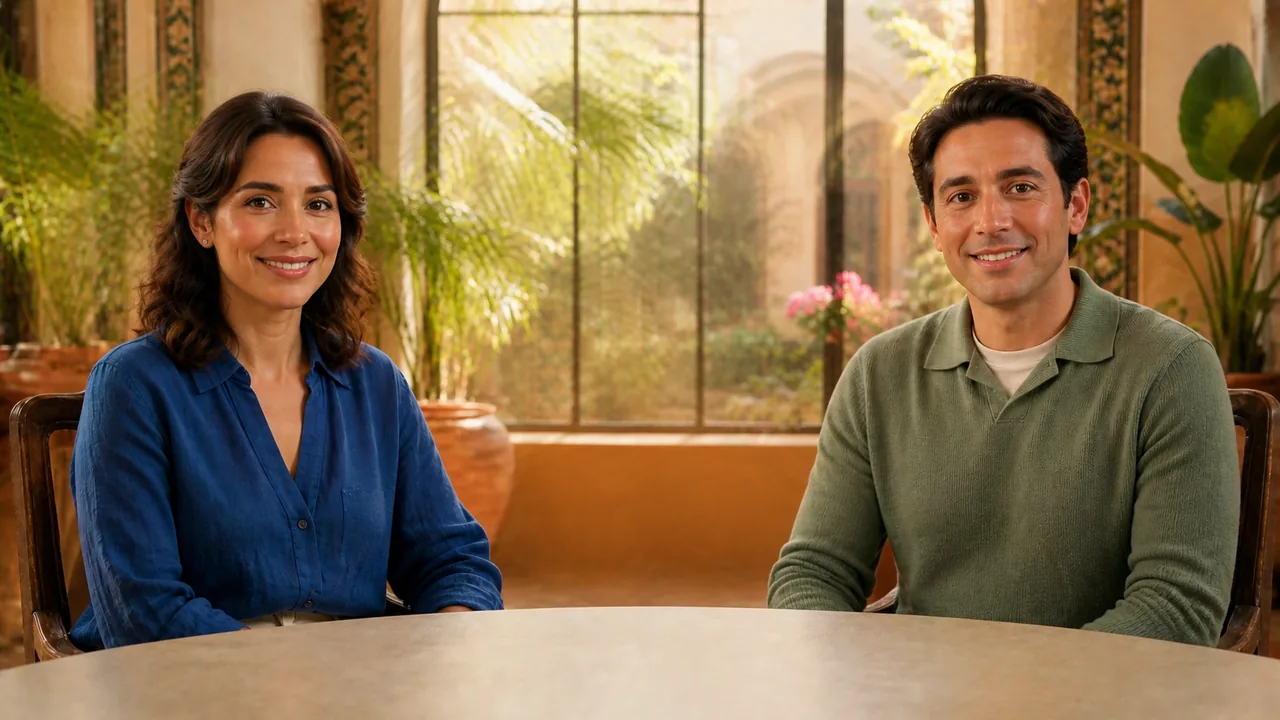 14:27 listen

 Hosted by Diego & Camila
Today you'll learn:
The vocabulary
6 phrases from “Perdí mi billetera”
Each phrase has a plain explanation and real lines from the show. Tap “Hear it” to jump to that moment.
Perdí mi billeteraHero phrase
I lost my wallet- ¡Ay, no! Perdí mi billetera.Oh, no! I lost my wallet.
- Nuestra primera frase es: Perdí mi billetera.Our first phrase is: I lost my wallet.
- Sentí mucho miedo, y dije: Perdí mi billetera.I felt very scared, and said: I lost my wallet.
La dejé en la mesaPhrase 1
I left it on the table- La segunda frase explica el lugar: La dejé en la mesa.The second phrase explains the place: I left it on the table.
- Regresé al café muy rápido, y pensé: La dejé en la mesa.I returned to the cafe very quickly, and thought: I left it on the table.
¿Alguien la vio?Phrase 2
Did anyone see it?- La tercera frase es una pregunta: ¿Alguien la vio?The third phrase is a question: Did anyone see it?
- Miré al mesero con calma, y pregunté: ¿Alguien la vio?I looked at the waiter calmly, and asked: Did anyone see it?
Pregunté en objetos perdidosPhrase 3
I asked at lost and found- La cuarta frase busca ayuda: Pregunté en objetos perdidos.The fourth phrase seeks help: I asked at lost and found.
- Nuestra cuarta frase busca soluciones: Pregunté en objetos perdidos.Our fourth phrase seeks solutions: I asked at lost and found.
Es una billetera caféPhrase 4
It's a brown wallet- La quinta frase describe el objeto: Es una billetera café.The fifth phrase describes the object: It is a brown wallet.
- La miré a los ojos, y dije: Es una billetera café.I looked her in the eyes, and said: It is a brown wallet.
Aquí está mi billeteraPhrase 5
Here is my wallet- Sacó mi cartera, y exclamé: Aquí está mi billetera.She took out my wallet, and I exclaimed: Here is my wallet.
- Y la sexta frase da alegría: Aquí está mi billetera.And the sixth phrase brings joy: Here is my wallet.
The full conversation
Listen & read along
Diego · now playing
¡Hola a todos! Bienvenidos a nuestro podcast de español.
ShortcutsAPrevious lineDNext lineSReplay this lineRLoop this lineSpacePlay / pause
00:00Intro
Hello everyone! Welcome to our Spanish podcast.
Hello, Diego! What a joy to be here with you today.
Same here, Camila. But I had a small scare yesterday.
What happened yesterday afternoon, Diego?
Oh, no! Yesterday I lost my wallet in a cafe.
Ha, ha, ha! You always lose things, Diego.
First the keys, then the umbrella, and now your wallet.
It is true, but this time I found everything very quickly.
That happens to all of us. Especially on a very busy day.
We walk fast, pay in a hurry, and leave things on the table.
Exactly! We leave in a rush, and forget to check our pockets.
Luckily, I knew what words to say in each place.
That is why today we learn six useful phrases.
They are phrases to solve problems in the city.
Let's listen to our six phrases of today, in order.
Our first phrase is: I lost my wallet.
The second phrase explains the place: I left it on the table.
The third phrase is a question: Did anyone see it?
The fourth phrase seeks help: I asked at lost and found.
The fifth phrase describes the object: It is a brown wallet.
And the sixth phrase brings joy: Here is my wallet.
Six perfect phrases for A1 and A2 level students.
Yesterday I experienced a fun story at a coffee shop in Puebla.
How nice! Tell us your complete story from yesterday, Diego.
Yesterday afternoon, I went to a quiet cafe in Puebla.
Puebla has very beautiful colonial streets, right?
Yes, I ordered an iced coffee and read a travel book.
What a great plan for a quiet sunny afternoon.
I paid the bill with coins, and went out to the plaza.
The main square is huge and has very nice benches.
I sat down to rest, searched in my right pocket, and felt nothing.
Oh, goodness! That moment gives a tremendous scare.
I felt very scared, and said: I lost my wallet.
I panic when I feel nothing.
I returned to the cafe very quickly, and thought: I left it on the table.
Waiters clean empty tables right away.
Exactly, I returned and saw the table clean and with nothing on top.
What a difficult moment, one feels like looking on the floor.
I looked on the floor, but saw no forgotten object.
In those cases, it is better to speak with the workers.
I looked at the waiter calmly, and asked: Did anyone see it?
Friendly waiters always help people.
The waiter smiled, and pointed toward the main reception.
What good news! There are very kind people in cafes.
I went to the entrance of the place, and asked at lost and found.
At the help desks they keep things with care.
The lady asked me for a clear description of my wallet.
It is normal, they ask for details to confirm you are the owner.
I looked her in the eyes, and said: It is a brown wallet.
A simple, exact, and very easy-to-understand description.
The lady opened a wooden box with a smile.
I imagine your excitement upon looking at that wooden box.
She took out my wallet, and I exclaimed: Here is my wallet.
What a great ending for your adventure yesterday in Puebla!
I found all my cards and my student ID.
I am very glad, Diego. Now let's review each phrase.
Let's start with our first phrase: I lost my wallet.
This phrase means in English "I lost my wallet". In other words, I don't know where my money is.
We use it if we search our pockets, and see nothing.
Losing the wallet always causes worry at the beginning.
That is true! But I prefer to run to search everywhere.
I do not agree with running; it is better to breathe deeply and think.
You are right, Camila. And check the bag three times before going out.
Now we move on to the second phrase: I left it on the table.
This phrase means "I left it on the table". That is to say, I forgot my item on the table.
We use the pronoun la, because the word billetera is feminine.
Exactly, we say la dejé to talk about the forgotten wallet.
For example: I drank coffee, and I left it on the table.
It is a very clear phrase to indicate the exact place.
We can also say: I left it in the car.
Exactly, we change the last word depending on the situation.
Let's move on to our third useful phrase: Did anyone see it?
This question means "Did anyone see it?". That is, we ask if another person saw the object.
It is a short, polite, and very natural question in Spanish.
We say it to the people sitting near us.
We can also add please, to sound more polite.
For example: Excuse me, did anyone see it near the window?
Our fourth phrase seeks solutions: I asked at lost and found.
This expression means "I asked at lost and found". In other words, I went to the help desk.
Lost and found is the place where they keep forgotten things.
There are lost and found offices in shopping malls and stations.
Yes, in the airport and in the subway we always find one.
For example: I went to the station, and I asked at lost and found.
The fifth phrase serves to describe: It is a brown wallet.
This phrase means "It's a brown wallet". We say the color and material.
We mention the brown color, or colors like black or blue.
We can also say if it is big, small, or made of leather.
For example: I am looking for my things, it is a small brown wallet.
Giving two details helps a lot, and makes the search easier.
And our sixth phrase of today is: Here is my wallet.
This phrase of great relief means "Here is my wallet". It is when we see our item again.
We say it with a smile, upon seeing our wallet.
It is the happiest moment of the whole day.
Now that we know the six phrases, let's practice together.
Excellent idea! Let's practice with an example dialogue.
Let's do a short roleplay, Camila.
Sounds fantastic to me, Diego. Let's begin right now.
Imagine that we are in a big library in the afternoon.
Very well, I am sitting reading a history book.
I check my backpack in a hurry, and speak to you with worry.
Diego! You have a scared face, what happened with your things?
Camila, I looked everywhere, and I lost my wallet.
Don't worry, Diego. Where were you ten minutes ago?
I studied on the second floor, and I left it on the table.
Let's go to the second floor to search calmly.
We arrive at the empty table. I look at the students next door.
Ask the students if they saw anything on the table.
I ask them politely: Excuse me, did anyone see it?
A student tells us that the guard picked up an object.
What good news! We walk quickly toward the reception.
The guard assists us at the counter with kindness.
I spoke with the kind guard, and asked at lost and found.
The guard asks us for details of your wallet right away.
I explain to him clearly: It is a brown leather wallet.
The guard takes out a brown wallet from a secure drawer.
I look at the wallet with great joy, and say: Here is my wallet.
What a great relief, Diego! We resolved everything with our six phrases.
These short conversations give a lot of confidence to speak Spanish.
You are completely right, Diego. Constant practice gives confidence.
And now comes the most awaited moment: our mini quiz of today.
Yes! Tell us with joy how we are going to play our mini quiz.
Here comes our mini quiz, with six practical situations.
I am ready and very attentive to respond to each situation, Camila.
Here comes situation number one.
Tell me the first situation, please.
You leave a store, search your pocket and feel nothing. What do you say?
I say with a surprised face: I lost my wallet.
Very well, Diego! A quick, clear, and very natural answer.
We move on now to situation number two.
Let's go with the second question, I am ready to answer.
You remember where you drank water in the restaurant. What do you say to your friend?
I tell her with certainty: I left it on the table.
Excellent answer! A very precise phrase to indicate the place.
Now listen carefully to situation number three.
Tell me the third situation, Camila.
You return to the restaurant and speak with the waiters. What do you ask?
I ask with kindness: Did anyone see it?
Perfect, Diego! A very polite question to ask for help.
Let's go directly to situation number four.
Go ahead with the fourth situation of the day.
You go to the shopping mall office to ask for information. What do you recount?
I recount calmly: I asked at lost and found.
Exactly! That way your friend knows you went to the right place.
Here we have situation number five.
Tell me the fifth situation of our quiz.
The attendant asks you for a description of your wallet. What do you answer?
I answer clearly: It is a brown wallet.
How nice, Diego! A simple and direct description.
And we finish our quiz with situation number six.
I am ready and attentive, for the last question on the list.
The attendant opens a box and shows you your wallet. What do you exclaim?
I smile with joy, and say: Here is my wallet.
Incredible job, Diego! You achieved six correct answers out of six!
What great happiness! I feel very happy with this result.
And now we move on to our final review, and to today's challenge.
Let's review once more our six phrases, in their correct order.
Excellent idea, let's review together slowly and calmly.
Phrase number one on our list is: I lost my wallet.
Phrase number two to indicate the place is: I left it on the table.
Phrase number three to ask others is: Did anyone see it?
Phrase number four to look for help is: I asked at lost and found.
Phrase number five to describe details is: It is a brown wallet.
And phrase number six to celebrate with joy is: Here is my wallet.
Six short and practical phrases to use at any moment.
And now comes our challenge, the speaking challenge for everyone at home.
What a great moment! Explain today's challenge calmly, Camila.
Look at your bag or backpack right now, and think of a real situation.
If you cannot find your wallet right now, what phrase are you going to say out loud?
Say the phrase in a clear voice, in front of the mirror.
For example, say with energy: I lost my wallet, help me search!
Repeating phrases out loud, helps memory.
Practice every day for a few minutes with our conversations.
And remember to check your pockets, before leaving a cafe.
Especially you, Diego! Don't forget your brown wallet again!
Ha, ha, ha! I promise to be more careful in the future.
We wish you a wonderful, productive, and joyful day!
See you in the next episode! See you soon, dear friends!
See you soon everyone, and always take care of your things!
Te tocaYour turn
Practica con 6 situaciones realesPractice with 6 real situations
1Perdí mi billeteraI lost my wallet
Sales de una tienda y tu bolsillo está vacío. ¿Qué dices?
You leave a store and your pocket is empty. What do you say?2La dejé en la mesaI left it on the table
Recuerdas dónde tomaste agua en el restaurante. ¿Qué dices?
You remember where you drank water in the restaurant. What do you say?3¿Alguien la vio?Did anyone see it?
Regresas al restaurante y hablas con los meseros. ¿Qué preguntas?
You return to the restaurant and speak with the waiters. What do you ask?4Pregunté en objetos perdidosI asked at lost and found
Fuiste a la oficina de ayuda en el centro comercial. ¿Qué cuentas?
You went to the help desk in the shopping mall. What do you say?5Es una billetera caféIt's a brown wallet
La encargada te pide describir tu cartera olvidada. ¿Qué respondes?
The attendant asks you to describe your forgotten wallet. What do you answer?6Aquí está mi billeteraHere is my wallet
El encargado te muestra tu cartera recuperada. ¿Qué exclamas?
The attendant shows you your recovered wallet. What do you exclaim?Today's small task
Imagina que no encuentras tu cartera: ¿Qué frase vas a decir en voz alta?Imagine you can't find your wallet: What phrase are you going to say out loud?
All languages · cocoaReview page for Perdí mi billetera